35% outside the two cities
The rate most people miss
Greater Missouri earns 35%, not 25% — ten points more on exactly the same work. The building has to sit outside Kansas City and St. Louis City and stay clear of low-income housing credits. On $10MM of qualified basis that is a million dollars of difference.
25% in Kansas City and St. Louis
Plus 20% federal
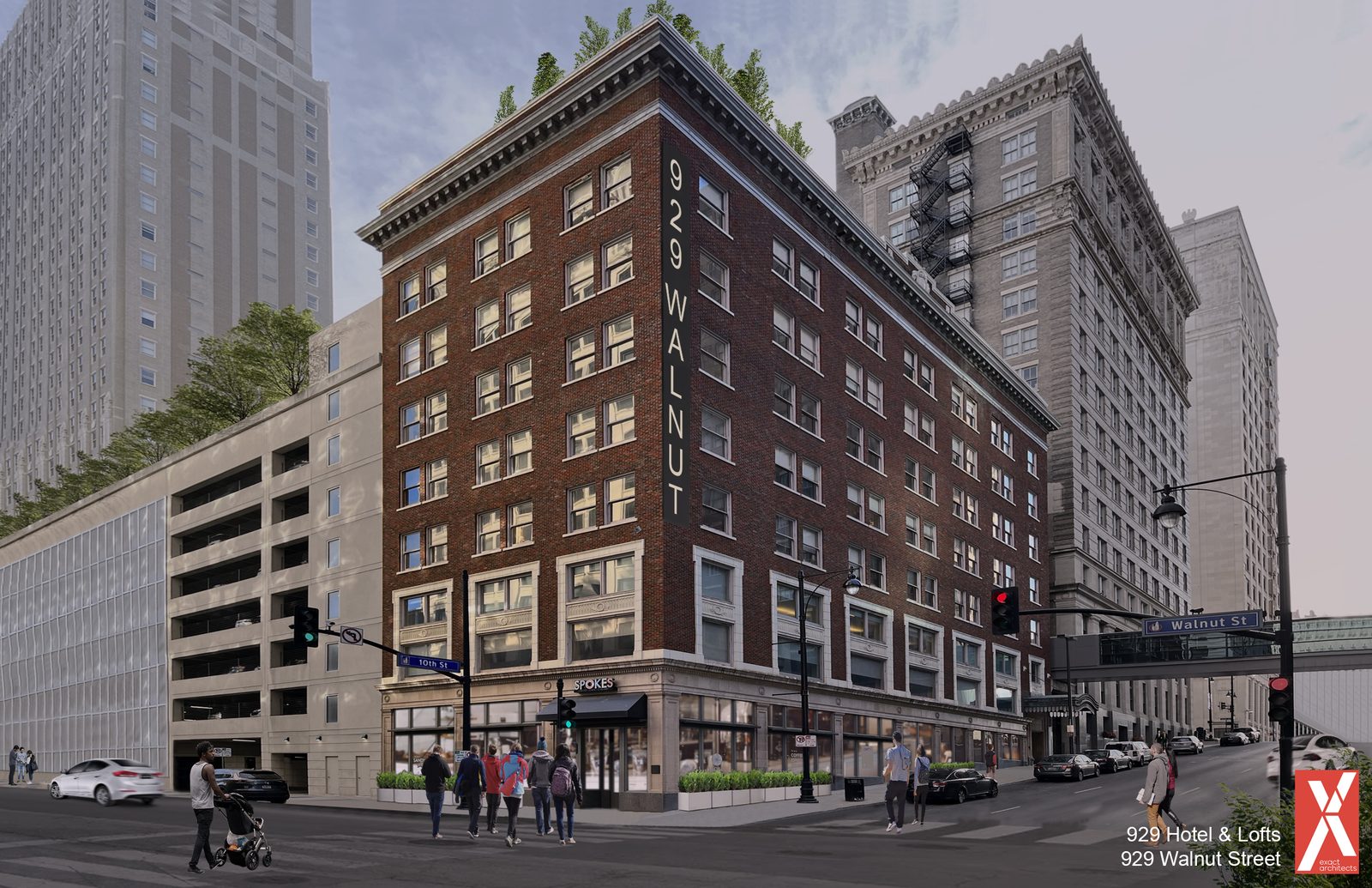
Forty-five percent of qualified rehabilitation expenditure between the two programs. On 929 Walnut that came to roughly $8MM of credit against a $10.5MM renovation.
The 35% has a catch
Housing credits turn it off
A building outside the two cities that takes low-income housing credits drops back to 25%. On a twinned deal that ten-point haircut has to be weighed against the housing equity before the structure is set, not after.
Transferable
Sell it
You do not need Missouri tax appetite. The credit is sold, and in a market with active buyers it prices well. Three-year carryback and ten-year carryforward on anything you keep.
The annual cap is real
Timing matters
Unlike Kansas, Missouri allocates against an annual cap, with a separate pool for qualified census tracts. Applications are sequenced, so when you file is part of the design decision rather than an afterthought.
Part 1, 2 and 3
Written here
We prepare the applications in the same office that draws the building, so the Part 2 narrative and the construction documents cannot contradict each other in front of a reviewer. That is the most common avoidable denial.
Stacks with the rest
NMTC · LIHTC · PIEA · LCRA · TIF
The Netherland carried federal and state historic credits, New Markets, a PIEA construction bond and abatement at once. The Wonder carried New Markets through AltCap. Missouri has the deepest local toolkit of any state we work in.
Statewide
Not just Kansas City
We work the program in Kansas City and across Missouri — St. Louis, Springfield, St. Joseph, Columbia, Jefferson City and the small-city main streets in between.